Beeac Heritage Walk


Map of Beeac Heritage Walk

START:
1. Rural Transaction Centre - 65 Main St.
(Plaque - opened 2003)
Former Beeac Post Office built 1928
Earlier Beeac Post Office destroyed by fire 1926
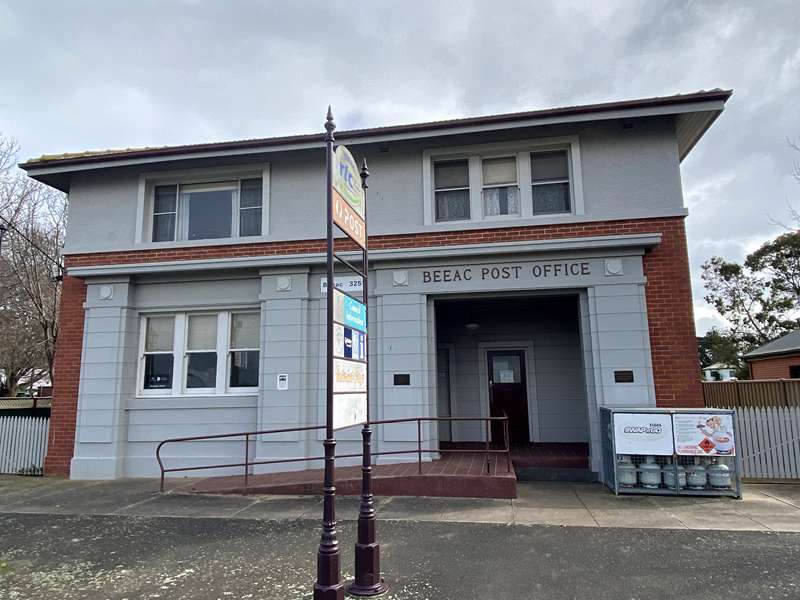
The first post office agency in Beeac, opened in 1862 by Joseph Connor, was located in Main Street opposite the present shop buildings. Following Federation in 1901 a new post office was built at 103 Main Street by the Post Master General’s Department. In 1911 a replacement post office was built at 65 Main Street. This building (pictured above) was destroyed by fire in 1926. A temporary post office operated at 47a Main Street, whilst the present post office was rebuilt on the site at 65 Main Street at a cost of £4075. It was officially opened on April 30, 1928.
In 2003 the post office was purchased by the Federal Government and became the community owned Rural Transaction Centre.
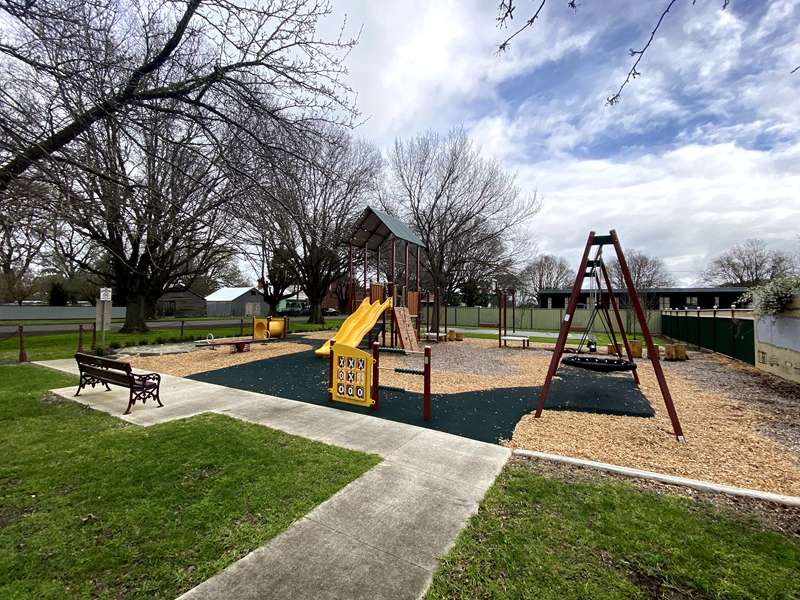
2. Children's Park and Playground
Plaque commemorating turning on of Mains Water -1961
3. Strip of Heritage Shops - Main St.
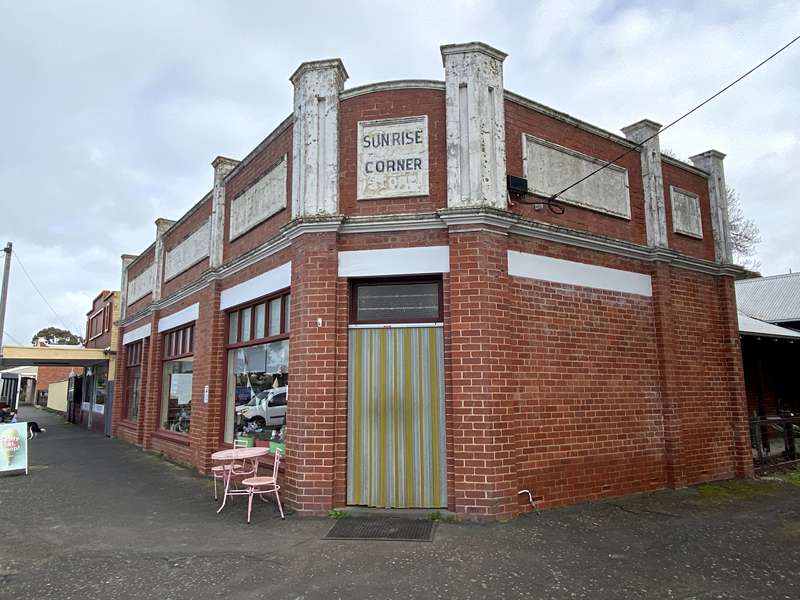
4. Shannon's Grocery Store and State Bank
77 Main St.

5. Gainger Bros Bus Lines - 79 Main St.
Garage opened 1917
Extensive bus service and vehicle dealerships (school, workers, passenger, tourist buses)
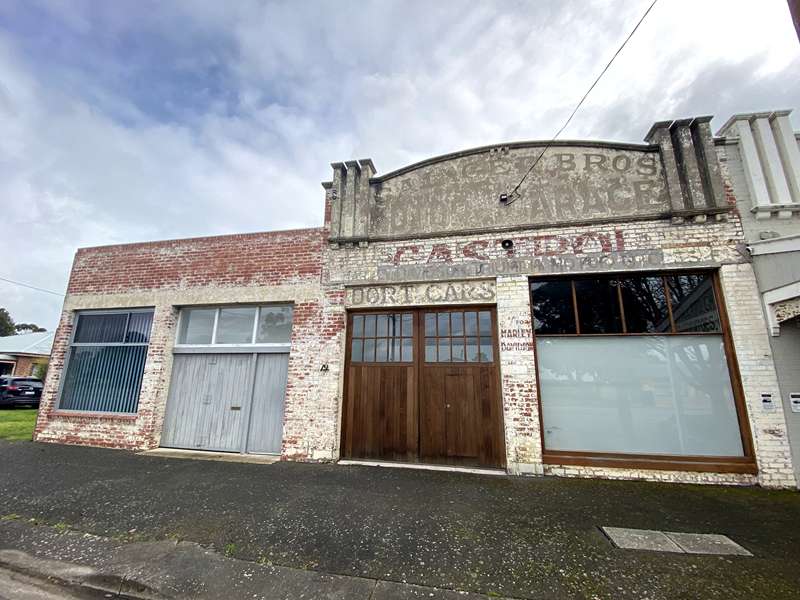
Gainger Bros Garage was a landmark in the Main Street of Beeac for many years. The business was opened in 1917 by Arthur Gainger and his brother Les. Arthur ran the business in Beeac and Les was in charge in Colac.
When the business first started Gaingers sold push bikes, Harley Davidson and Triumph motor bikes and Dort motor cars. They later sold Fargo utes and De Soto cars. In time they had a very successful Austin car dealership. The cars sold ranged from the little Austin A30 to the Austin Sheerline and the luxurious top of the range Sheerline Princess. They also sold a range of utes and trucks as well as the sporty Austin Healey.
Gainger Bros was probably best known throughout the Beeac and Colac districts for their bus service. The first buses were models of Rio, Federal and the Diamond T. Later Austin and Bedford buses were used. They transported children to Colac High and Alvie Consolidated Schools as well as workers and passengers to Colac.
6. Farmers Arms Hotel - 87 Main St.
Built 1874 - Rebuilt 1914
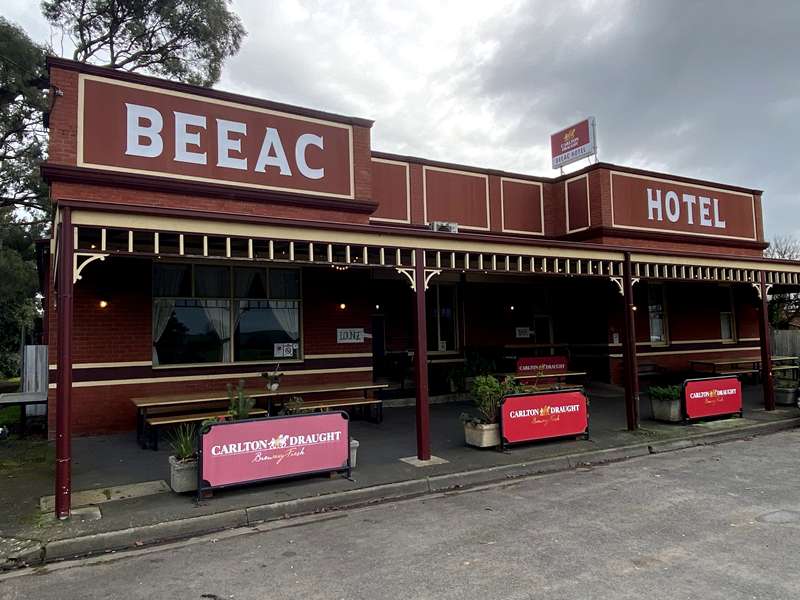
The Farmers Hotel (1866) established by Michael Monahan was Beeac’s second hotel. It was a wooden building of 15 rooms with two shops attached. In later years a billiard room was added. Monahan was succeeded by Daniel Kinane in 1870 with William and Catherine Edwards taking over in 1875. Together with their son Leo, they ran the business for the next 36 years.
Catherine Edwards sold the hotel in 1905 to Ernie Camm. In 1914 Ernie Camm commissioned a new structure. The new building was placed alongside the existing hotel which was demolished in 1921. Licensees in the period 1920 to 1940 included Mat Gleeson, C. Turner, James Moran, C. Copsey, H. Woods, C. Cole, Alex Allen and Claude Davey.
The Moynihan family took over running the hotel in 1941 for the then owner the Ballarat Brewing Co. After the Moynihan family bought the freehold in 1960, the original verandah was removed as part of extensive renovations. In 1981, after 40 years of tenure, the hotel was sold to John Belitho. Other owners have been Kinsella, Halliday, and Cooper. In 2005 owners Neville and Cathy Fergus built a new full-length verandah.
In 2009 Grant Hickey took over as licensee of the hotel from the Caldcoat family. This hotel is one of the oldest hotels in the Shire at nearly 150 years in business.
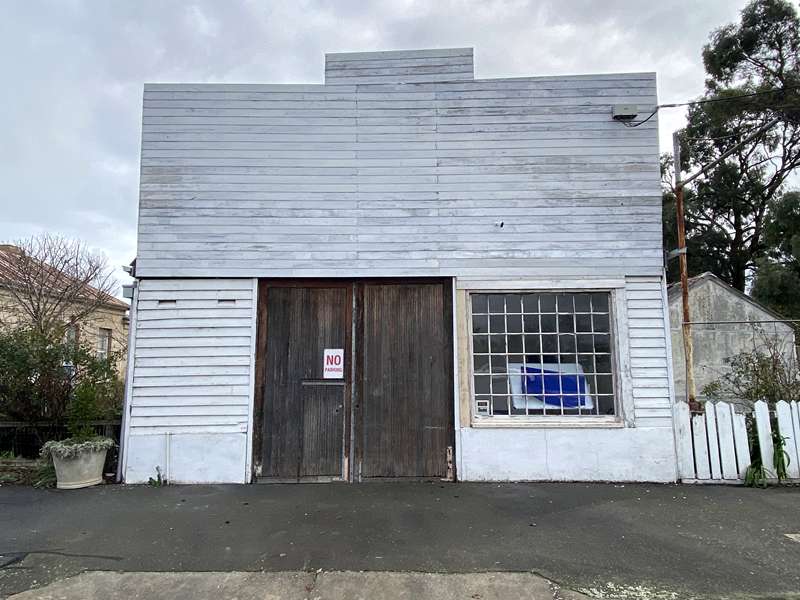
7. Hall Windmill Manufacturing - 91 Main St.
Operated 1921-1946
Building then sold to Allan Turner
8. Former London, E.S.&A., ANZ Banks - 93 Main St.
Built 1888 Classified "C" National Trust.
(Private residence)
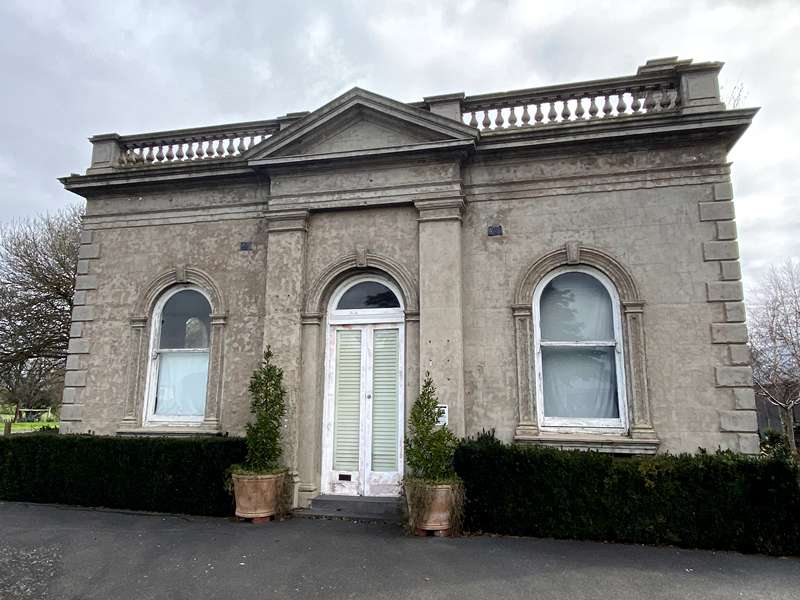
The London Chartered Bank opened in Beeac in February 1888. This building was designed by Colac architect Alexander Hamilton and opened in January 1889. Built of cement-rendered brick on a dressed bluestone plinth, ornamented with moulded architraves, balustraded parapet and central door and pedimented entablature. It is a noted work of Alexander Hamilton, a self-trained architect and former Scottish millwright, and is in a conservative classical style characteristic of his practice.
The building became the London Bank of Australia Limited after the 1893 financial crisis. In 1921 it was acquired by the English, Scottish and Australian Bank (ES&A).
The ES&A Bank was merged with the ANZ Bank in 1970. The Beeac branch was at first a full-time Colac agency branch, but later only open part-time. Despite some well-attended public meetings held to keep the bank open, it eventually closed in the 1980s. The building was sold and is now a private residence. It was re-classified by the National Trust in 1998 and is of local significance.
9. Methodist Church* - 97 Main St.
Built 1878 in bluestone - Demolished 1974
Site of first public building in Beeac - 1862
(Housed the first church and the first school)
A government grant of 2 acres of land was allocated for Wesleyan church purposes soon after settlement. A small wooden church measuring 24ft x 16ft and built at a cost of £58 was opened on Sunday, March 15, 1862. This was the first public building to be erected in Beeac.
In 1878 Beeac Methodists erected a new stone church alongside the original wooden one which had done such good service for 16 years. Plans were drawn by Davidson and Henderson noted Western District architects. The building was opened on October 6, 1878. The contract price was £551.10.0 but several alterations and improvements brought the total outlay to £700.0.0.
In 1886 a home missionary was appointed to reside at Beeac and a five roomed parsonage was built next to the old church. Later a verandah and other improvements were added.
Structural problems contributed to the decision to close and demolish the church following the combining of the Methodist and Presbyterian congregations in 1960.
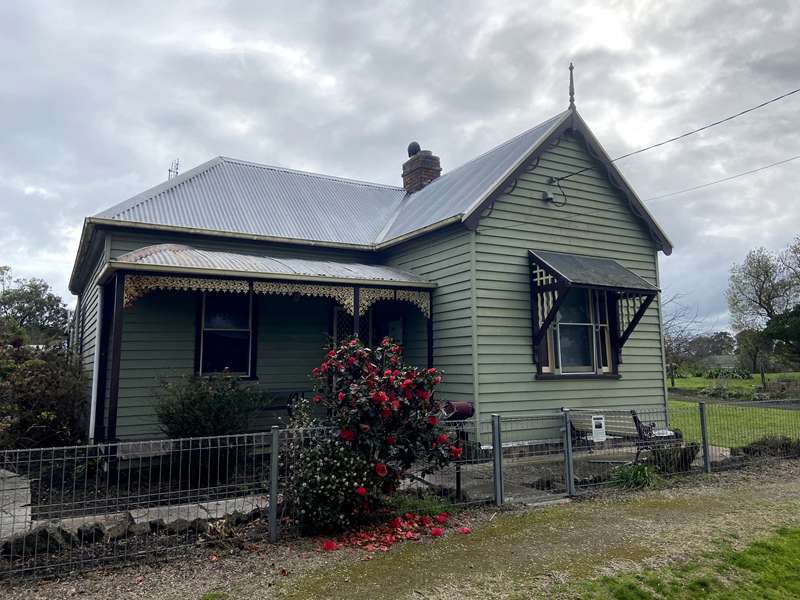
10. Former Methodist Parsonage - 99 Main St.
(Private residence)
10a. Stephen's Sports Store - 107 Main St.
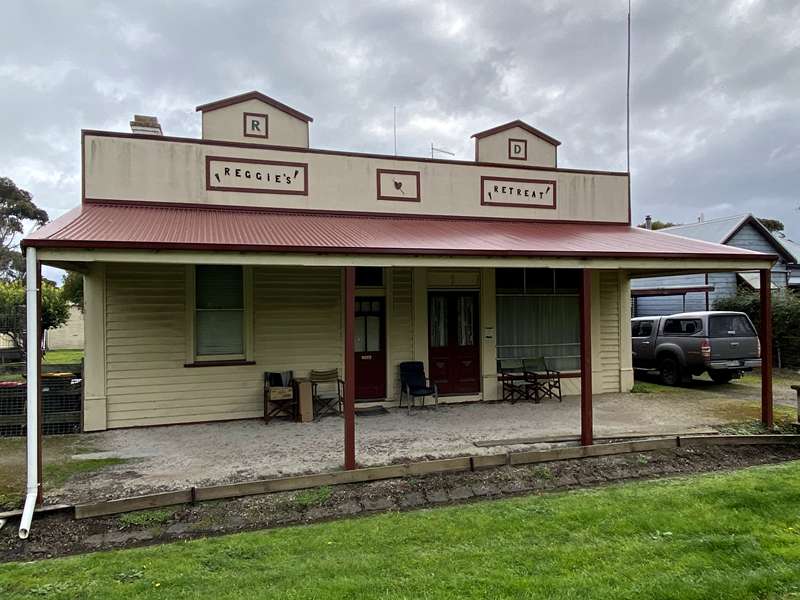
11. Former St. Augustine's Church of England -111 Main St. Built 1898 Closed 1996.
(Private residence)
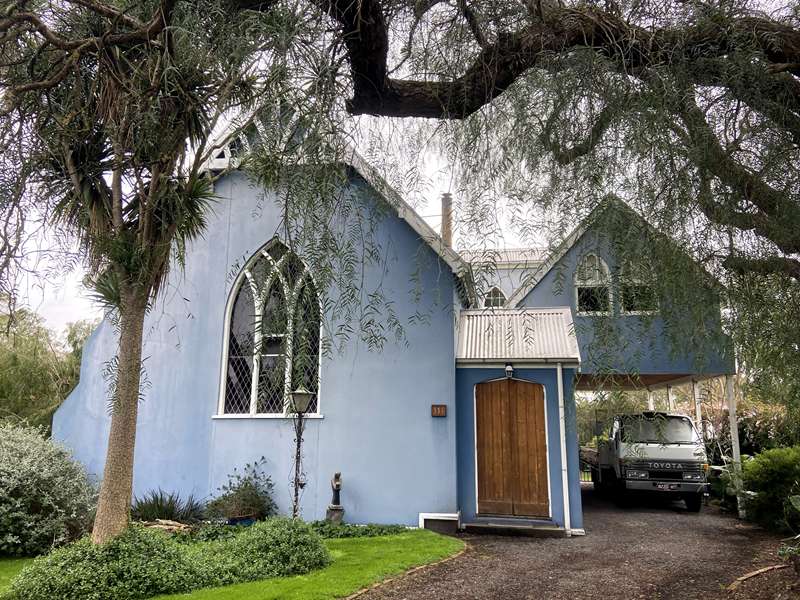
St Augustine’s Church of England was a place of worship in the Beeac district for almost 100 years before it closed in 1996.
Around 1896 Mr A. Tatchell, manager of the ES&A Bank, encouraged residents to establish this church. The block of land at 111 Main Street was purchased for £15.0.0. The foundation stone was laid on August 19, 1898. Rev. H.M. Rupp was the first clergyman appointed to St. Augustine’s.
Due to the efforts of Rev. Rupp, a renowned botanist, St Augustine’s Flower Show came into being. It was held annually for seventy years until it ceased in 1970.
The final service of St Augustine’s was held on August 11, 1996 when the church was deconsecrated.
The church was sold and has been converted into a private residence.
12. Hospital No. 2 'Lochaber' - 104 Main St.
Est.1918
(Private residence)

13. St Michael's Catholic Church - Built 1924
Closed 2009
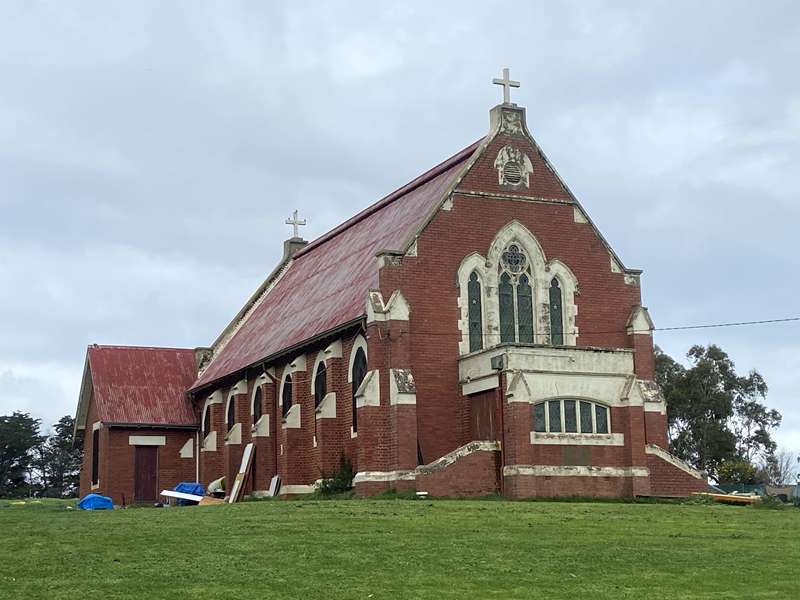
The original Catholic Church, built in 1867 (pictured above) was located about 200 metres to the south of this building on the opposite side of the road. A school was opened in the church building on February 10, 1922.
Soon after, it was decided to build this new church. The first Mass was celebrated on December 14, 1924. The design is general English gothic of the decorative period and its special feature is the nave, lit by magnificent tracery (ornate) windows. It was designed by Mr A. Fritsch FRVIA and built by Messrs Searle and Wallace builders of Colac at a cost of £4063.2.0. Donations and fundraising by parishioners completely paid for the building within one year.
The church served its congregation until the closing Mass which was celebrated on November 22, 2009 with over 300 people in attendance. A shortage of priests, high maintenance costs and a declining number of parishioners led to the closing of the church. It was sold in December 2010.
14. Public Hall- 117 Main St.
Burnt down 1985
15. Danaher's (Bouchier's Hotel)*- 119 Main St.
First Hotel Noted on first map of town in 1869
16. St Michael's Catholic Church - 123 Main St. Later St Michael's Catholic School* Built 1867 in bluestone - Demolished 1969
17. Public Library* - 37 Coulston St. Built 1880s
Moved to Recreation Reserve as change room 1931
18. Tennis Courts - Constructed 1908
19. Shire Depot
20. Dalgety's Saleyards* - 25 Coulston St.
21. Police Station No. 1 - 15 Coulston St. until 1936
Cnr Wallace & Coulston Sts
.jpg)
22. Oldest weatherboard home in Beeac -
8 Wallace St. - shifted from 'Grassyvale' (3km west of Beeac)
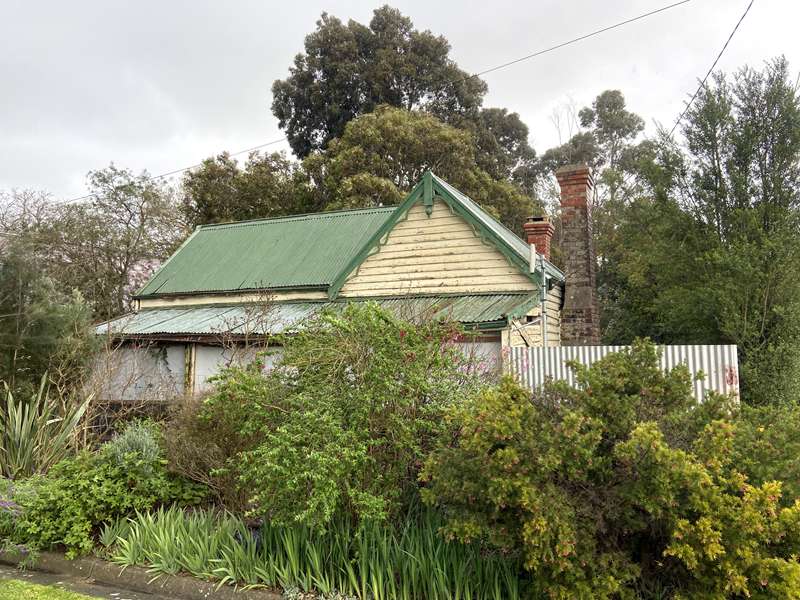
22a. Graingers Maintenance Workshop
6 Wallace St.
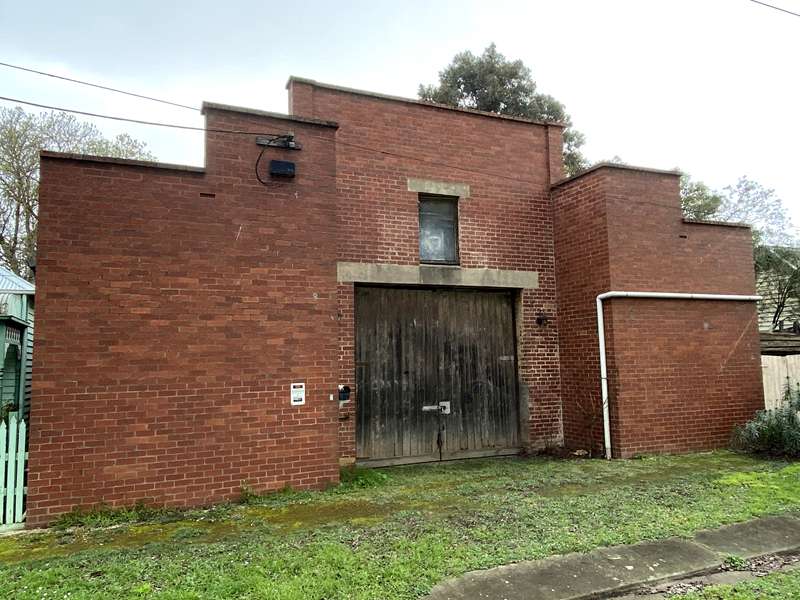
Gainger Bros Garage was a landmark in the Main Street of Beeac for many years. The business was opened in 1917 by Arthur and his brother Les. Arthur ran the business in Beeac and Les was in charge in Colac.
Gainger Bros had a workshop in Wallace Street. This was built during the depression years, (the late 1920s to the late 1930s). A bricklayer was employed to do the brickwork but the labouring was done by people who owed the business money. The tie down bolts and brackets were made by Jack Hall Engineering. Due to the pre-war and war time shortage of roofing iron the roof on the workshop was not finished until after the war. During the war the buses were fitted with gas producers. As the Wallace Street workshop had no roof they were able to burn wood in old tanks to make charcoal to fire the gas producers.
Les Gainger died in 1958 and Arthur sold the business to Noel King of Colac in 1966. Arthur Gainger died in May 1976. He was 81 years old. Both Les and Arthur Gainger are buried in the Beeac Cemetery.
23. Former Doctors' Residence and Surgery -
13 Coulston St.
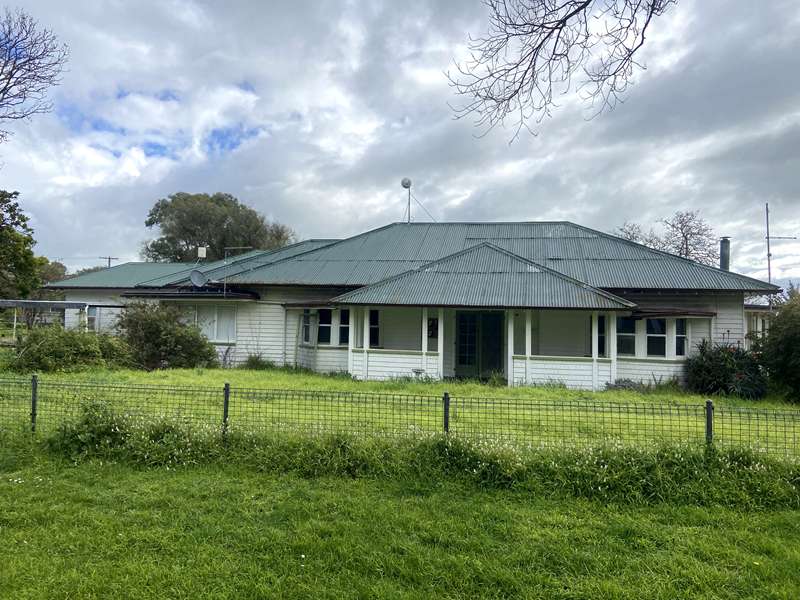
24. Police Residence No. 3
Oddfellows Hall site*
25. First Hospital - 'Braemar' - 9 Coulston St.
Est.1906 by Nurse Gray
26. Police Station No. 2 - 14 Lang St.
Est. 1936. Burnt down 1937 - rebuilt
.jpg)
27. Fire Station - Lang St.
First Fire Brigade 1924
28. Holdenson and Nielsen Creamery Depot*
Lang St.
Collected milk daily from local farmers
Cream then transported from Railway Station
29. Railway Station* - Lang St.
Operated 1889 -1953
Platform and turntable
(Private property)
30. Former R.S.L. Hall - 17 Lang St. Ex- Army hut
Sub-branch disbanded 1980s - building sold
(Private property)
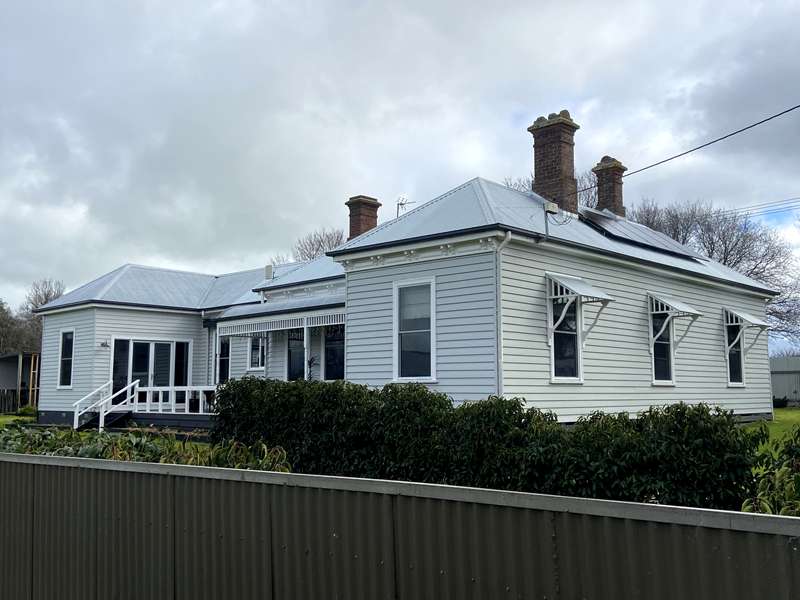
31. Former St Andrew's Presbyterian Manse
16 Lang St. Built 1899
Became Uniting Church Manse in 1977
32. Prowse Windmill Manufacturing - 51 Main St.
Operated 1900-1940 - also Hardware Store
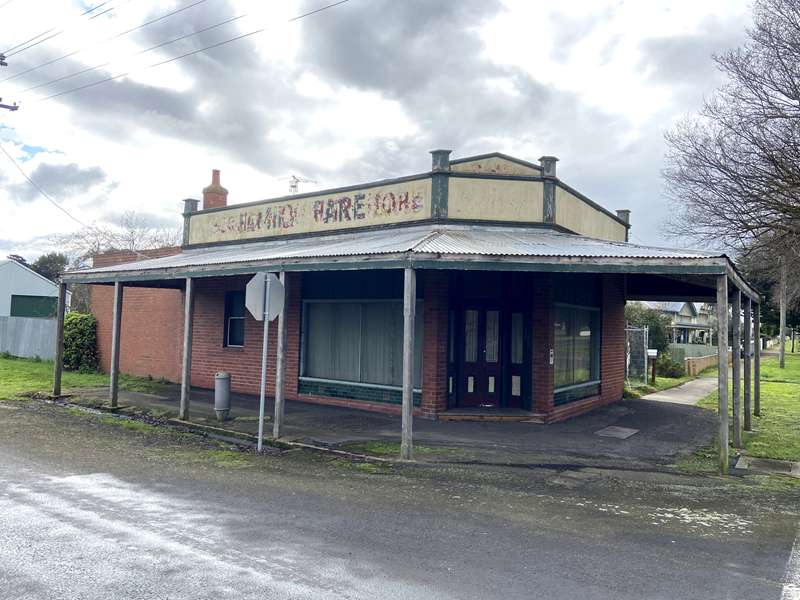
In 1900 James Prowse bought the Lang Street business of blacksmith and windmill manufacturer Robert Brown. Brown’s business was further west in Lang Street. A new brick shop was later built on the corner as a hardware shop.
After World War I James Prowse and Sons secured government contracts to supply windmills to soldier settlers. With over 30 people employed at the business they supplied windmills all over Victoria as well as in New South Wales and South Australia. James Prowse and Sons also supplied tanks, tank stands and metal-lined wooden cattle troughs.
James Prowse’s three sons took over the business when he retired in 1928. James Prowse died in 1941 and is buried at the Beeac Cemetery. The business closed in 1940. World War II had intervened and caused a manpower shortage and the business could not continue.
Later G. A. Cops ran a General Store from 1946-1976.
33. Masonic Lodge Hall - 49 Main St.
Rosebank Lodge formed 1924 - Hall built 1959
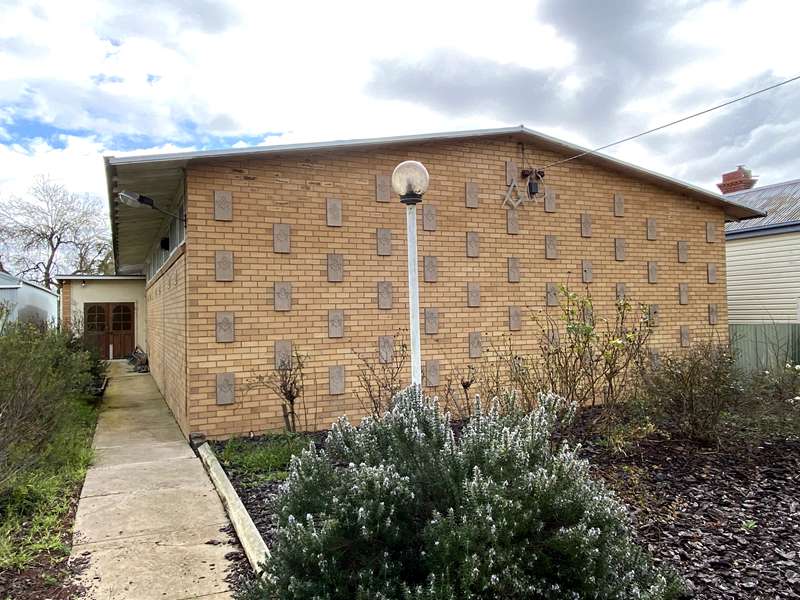
34. Former Infant Welfare Centre - 43 Main St.
Built 1967 - closed 1997 (Plaque)
(Private residence)
35. Saleyards* - 48 Main St. Cnr Main & Lang Sts
Operated late 1800s to 1940s
(Plaque in memory of Cr H.L. Martin and Cr T. Barnard)
36. Bluestone House - 21 Lang St.
Built 1920s by William Pink. Constructed of local stone
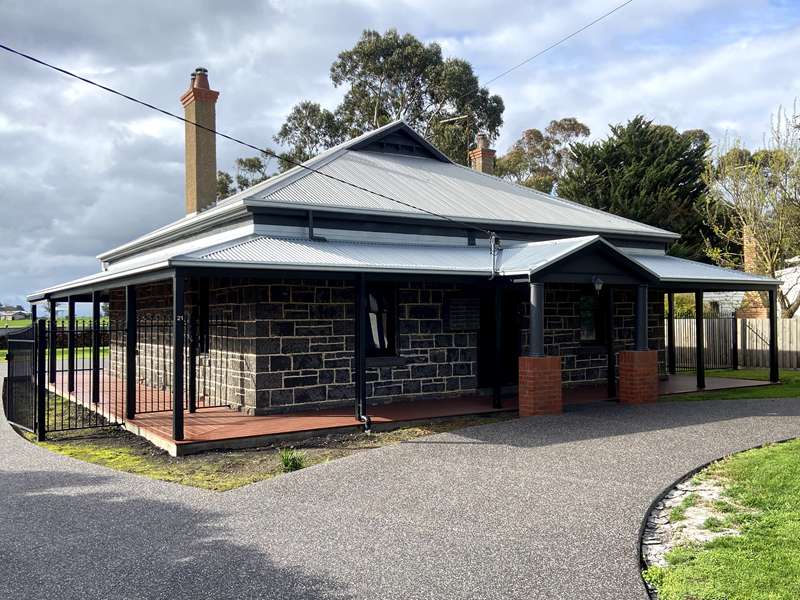
37. Beeac Hospital (CAZNA) - built 1928 by Dr Cave
Now Community Health Centre
38. Beeac Primary School - No. 482 built 1923
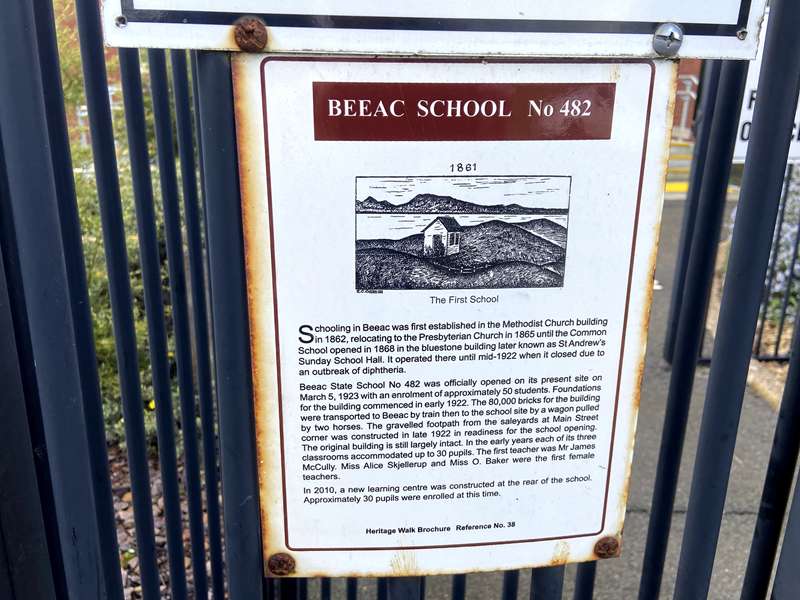
Schooling in Beeac was first established in the Methodist Church building in 1862, relocating to the Presbyterian Church in 1865 until the Common School opened in 1868 in the bluestone building later known as St Andrew’s Sunday School Hall. It operated there until mid-1922 when it closed due to an outbreak of diphtheria.
Beeac State School No 482 was officially opened on its present site on March 5, 1923 with an enrolment of approximately 50 students. Foundations for the building commenced in early 1922. The 80,000 bricks for the building were transported to Beeac by train then to the school site by a wagon pulled by two horses. The gravelled footpath from the saleyards at Main Street corner was constructed in late 1922 in readiness for the school opening. The original building is still largely intact. In the early years each of its three classrooms accommodated up to 30 pupils. The first teacher was Mr James McCully. Miss Alice Skjelkrup and Miss O. Baker were the first female teachers.
In 2010, a new learning centre was constructed at the rear of the school. Approximately 30 pupils were enrolled at this time.
39. Community Centre and Recreation Reserve 55 Lang St. New hall opened 1991
40. War Memorial - erected 1923
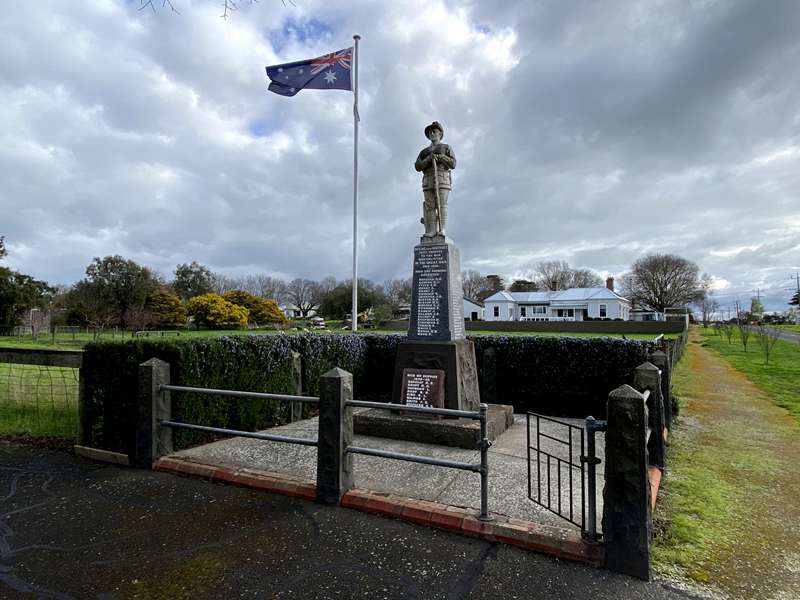
This particular monument sculptured unusually in marble at cost of 335 pounds, plus 35 pounds for steps at base Avenues of Honour - Wallace & Coulston Sts.
41. St Andrew's Presbyterian Church - 53a Main St.
Built 1862 Became Uniting Church in 1977
Builder John Pell - Colac
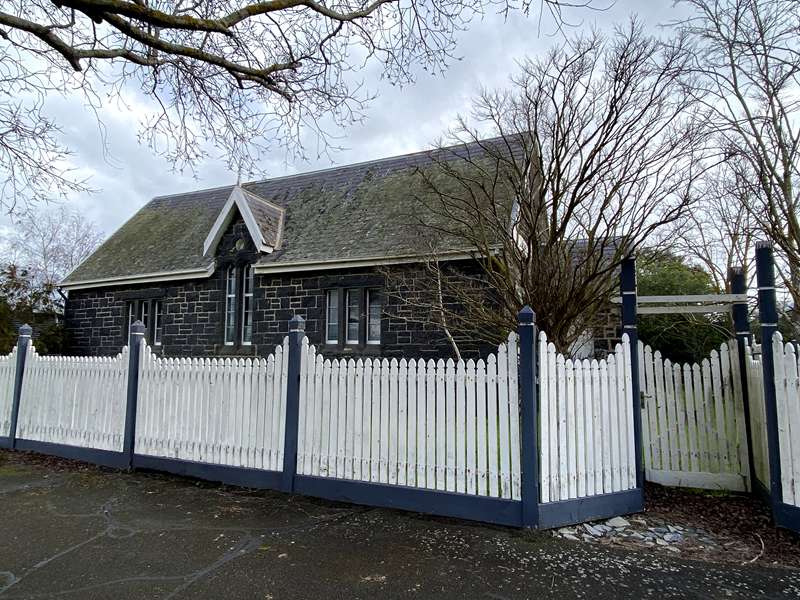
42. Common School - 53 Main St. built 1868
then Presbyterian Sunday School 1923-2004
Also used as hall by many local organisations
Architect - Davidson & Henderson
(Private residence)
43. Site of Original Head Teacher's Residence*
55 Main St. Built 1878
43a. Saddlery Billiard Saloon - 57 Main St.
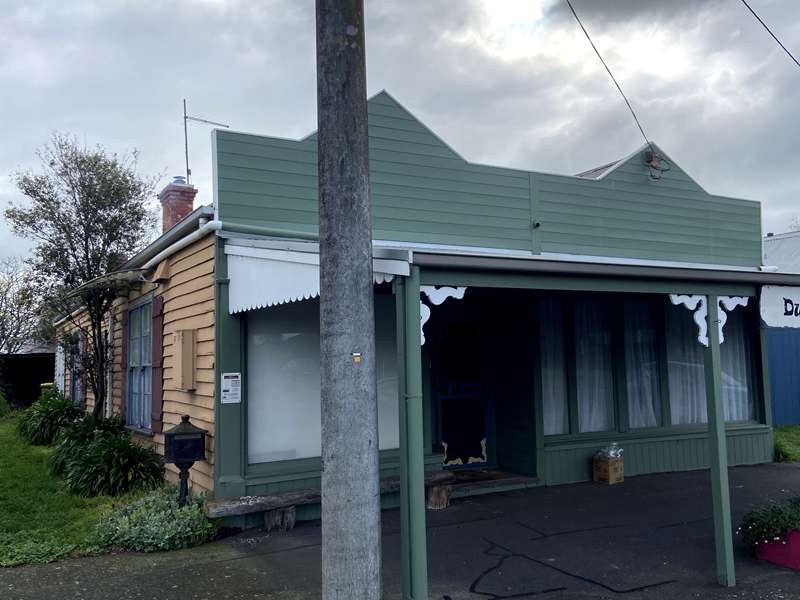
44. Police Station No. 3 - 63 Main St.
Rebuilt 2003 - (Plaque)
45. Heritage Windmill Park - Main St.
Est. 2010 to commemorate Beeac's 150th birthday


46. Corbet Road - 2km north of Beeac -
Site of Corbet Windmill Manufacturers*
47. Beeac Creamery - original wooden structure built 1894 by Colac Dairying Co. New brick building 1929
(Privately owned)
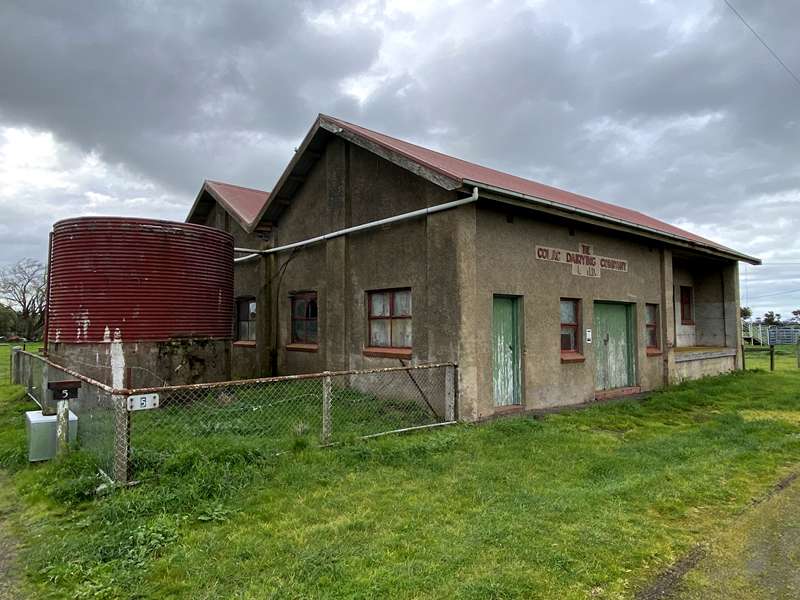
The Beeac Creamery was built about 1894 by the Colac Dairy Company at the intersection of Cressy and Eurack Roads, about 2 miles to the north of the town.
In the 1903 photo below, farmers “pass the time of day” as they deliver their whole milk in cans and wait for it to be separated, with the cream (butterfat) being sold to the CDC to be made into butter and cheese, and the skim milk (whey) being taken back to the farms to feed pigs and young calves.
The original creamery was replaced with a new brick building in 1929.
In later years, when milk and cream were collected directly from farms, the building served as a depot for trucks and as a produce store.
By the 1970s all CDC suppliers had converted to bulk milk collection by tanker. The building stands as a reminder of a bygone era and gives its name to “Creamery Corner”.
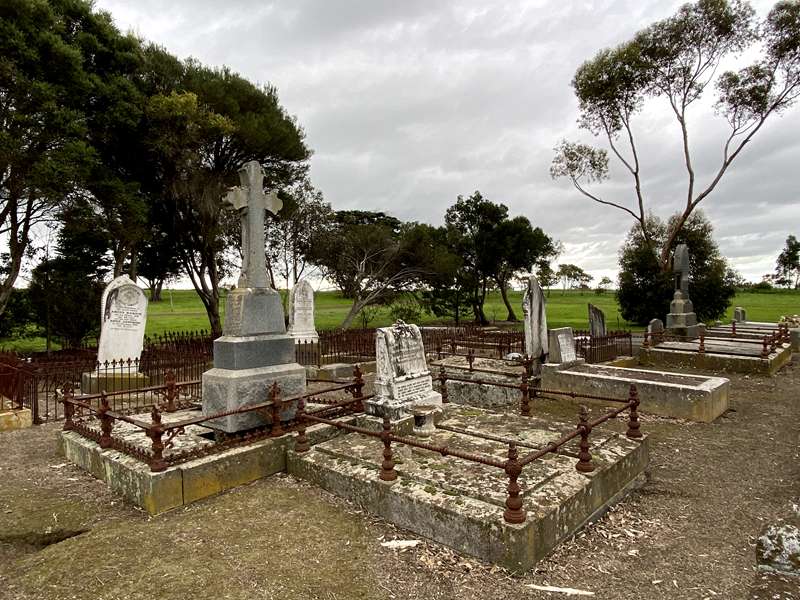
48. Cemetery - South Cundare turn off 2.8km north of Rural Transaction Centre
Est. 1870
49. Lake Cundare Salt Works - ruins still visible*
Operated 1868 to early 1890s
Salt harvesting by hand continued until the 1950s
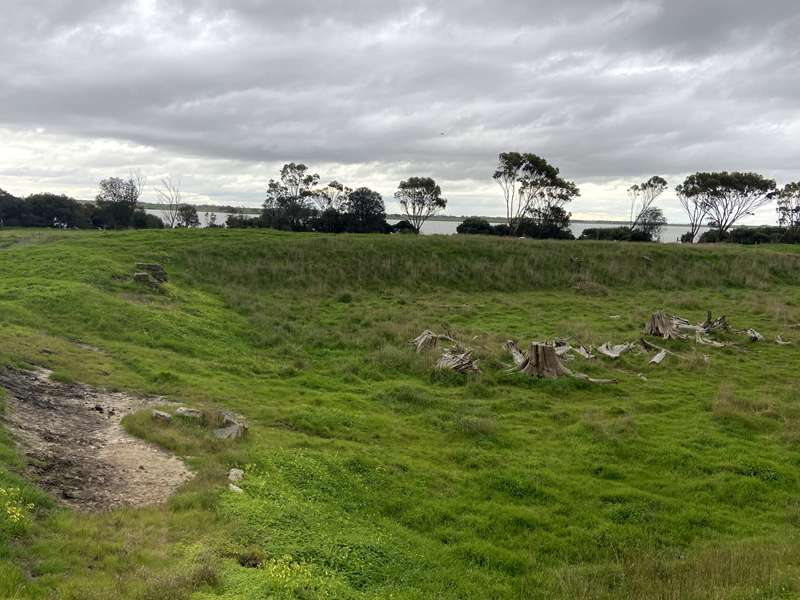
50. Continue along the South Cundare Road to some historic stone walls
There is an example of a stone wall and photo of the South Cundare Road wall at the Heritage Windmill Park.
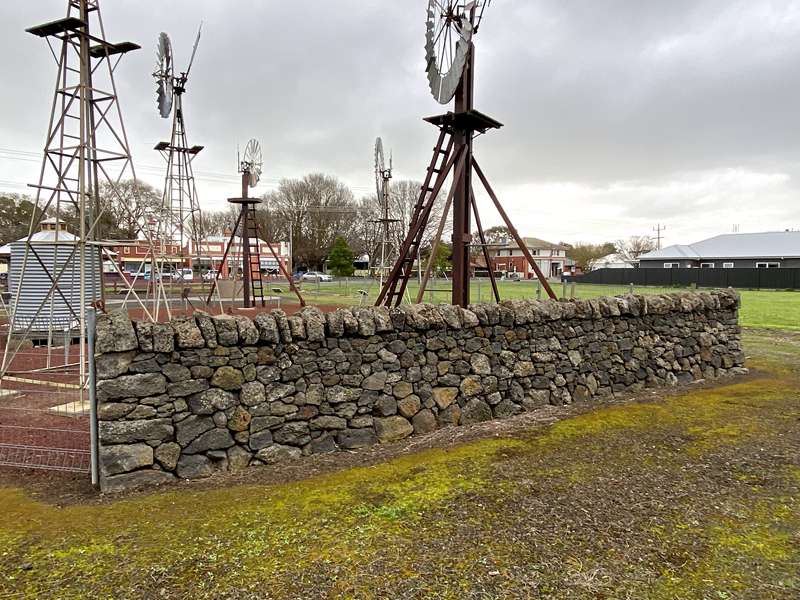
Dry stone walls marking boundaries of rural holdings form a distinctive feature in the landscape throughout this district.
The ancient craft was brought to this area in colonial times from England, Scotland, Ireland and Wales.
Although similar in purpose to those in other countries, Beeac district dry stone walls are of many different types and styles, with characteristics that were influenced by the methods used in each waller’s country of origin. Older farmers could distinguish who had built particular stone walls by their unique design - sometimes by the shape and size of the capping stones.
Australia’s dry stone walls not only marked the boundaries of land-holdings and defined paddocks and stockyards but also helped to clear the land so that crops could be grown and sheep and cattle could be safely introduced. Such walls were also used as a barrier against the “rabbit plague” that, at one time, threatened economic ruin for many farming families.
51. South Cundare School - built 1869 closed 1921
(Privately owned with no public access)
52. Weering School - built 1867 closed 1968
(Privately owned at 350 Weering School Rd, Weering)
53. Eurack Avenue of Honour - Est. 1916
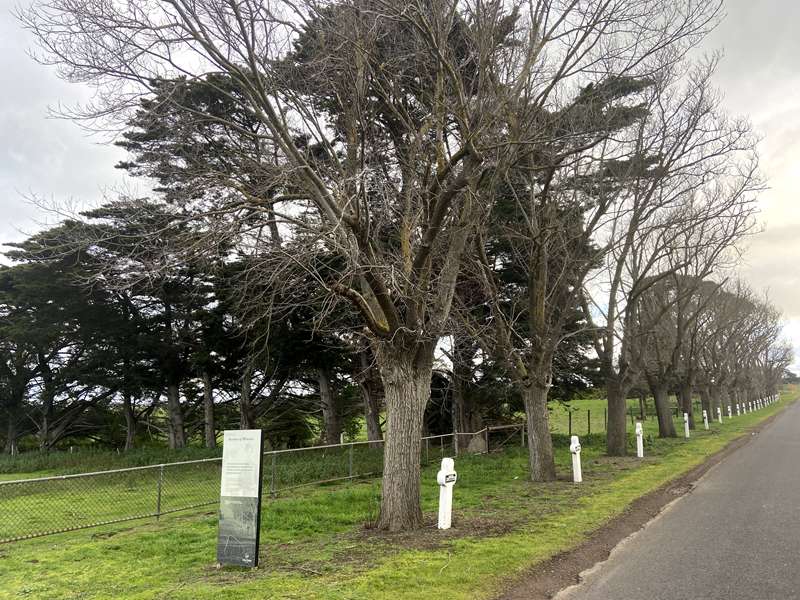
The Eurack Avenue of Honour was planted by the Eurack School children in 1916 as a tribute to the enlisted servicemen. Generally acknowledged as first Avenue of Honour to have been planted.
* ORIGINAL BUILDINGS NO LONGER EXIST ON SITES SHOWN IN RED
Photos:
Location
65 Main Street, Beeac 3251 View Map


